
Celebrating 20 Years
We’re marking our twentieth anniversary in 2026. Here’s a look back at where we’ve been.
How we began

Bringing an Idea Home
The creation of a Baltimore-based education research-practice partnership was inspired by the Chicago Consortium on School Research, which was established in 1990. What could a similar partnership between the many universities in the Baltimore metropolitan area and its public school system accomplish in the context of the city’s unique history, challenges, and opportunities? A broad coalition of partners from academia, PK-12 education, and philanthropy came together in 2005 and 2006 to shape the Baltimore Education Research Consortium according to principles of collaboration, combined with scholarly independence.
Over time, BERC has served as a:
- longitudinal data steward;
- convener of research expertise from across 11 universities;
- thought partner;
- co-designer of research questions;
- research disseminator;
- incubator of emerging ideas, policies, practices, and faculty.
To learn more about our past and present, take a moment to review this essay from 2012 and to explore our Research & Publications section.
Facts That Stick
Over twenty years and dozens of research projects, BERC has generated practice-relevant insights that have gone on to impact how educators do their work and how we understand the journeys of students in Baltimore City Public Schools and beyond. Here are a few highlights.
2
The number of absences from school in the month of September that are predictive of chronic absence later in the school year. [Source: Linda S. Olson, Why September Matters: Improving Student Attendance, July 2014]
2015
Baltimore City Public Schools graduates from this class enrolled more often in 4-year colleges than 2-year colleges — and subsequent graduating classes still do. [Source: Rachel E. Durham, Rudy Ruiz, and Faith Connolly, Baltimore City Schools College Fact Book, January 2017]
36.2 minutes
The estimated length of the average student commute to school on public transportation in the 2014-15 school year. [Source: Marc L. Stein, Jeffrey Grigg, Curt Cronister, Celeste Chavis, and Faith Connolly, Getting to High School in Baltimore: Student Commuting and Public Transportation, January 2017]
Third Grade
Kindergartners who demonstrate readiness on the Kindergarten Readiness Assessment (KRA) and have strong attendance were more likely to meet or exceed expectations on PARCC math and ELA tests three years later. [Source: Lieny Jeon, Nat Dewey, Xiangyu Zhao, Briana Bostic, and Marc Stein, Kindergarten Success Fact Book 2022: Baltimore City Kindergarten Classes of 2016-17 to 2021-22, November 2023]
90%
The rate at which ninth-graders who are promoted to tenth grade with no course failures graduate from high school on time. [Source: Marcia H. Davis, Juan B. Cortes, Rachel E. Durham, and Francesca Gamber, Ninth Grade Success in Baltimore City: Fact Book of Data Trends and Key Measures, November 2024]
Fifth Grade
Attending Head Start or public pre-kindergarten is associated with stronger school attendance through the end of elementary school. [Source: Lieny Jeon, Margaret R. Burchinal, and Sooyeon Byun, “Does Head Start or Public Pre-Kindergarten Enrollment Matter? Associations with Children’s Long-Term School Attendance in Baltimore City,” Early Childhood Research Quarterly, vol. 71 (2025)
.
February: Remember 2006?

Remember 2006? Maybe you were finishing up a degree, getting married, or buying your first house. Click here to relive some of the year’s biggest pop culture moments with our anniversary game.
March: Coming Together to Support New Teachers

In our spring 2026 newsletter, find out how faculty from BERC member Towson University are collaborating with Baltimore City Public Schools to support new teachers through professional development for school leaders.
April: Supporting the Next Generation of Researchers!

During the 2025-26 school year, BERC members got to support the eleventh-grade AP Research class at Carver Vocational-Technical High School! In the fall and winter, we provided research methodology presentations as students designed their research projects. In April, we returned to participate in their final presentation panels. Thank you, Carver, for having us!
(Pictured: Frankie Gamber and Rachel Durham at Carver on April 28)
May: Take It Outside!
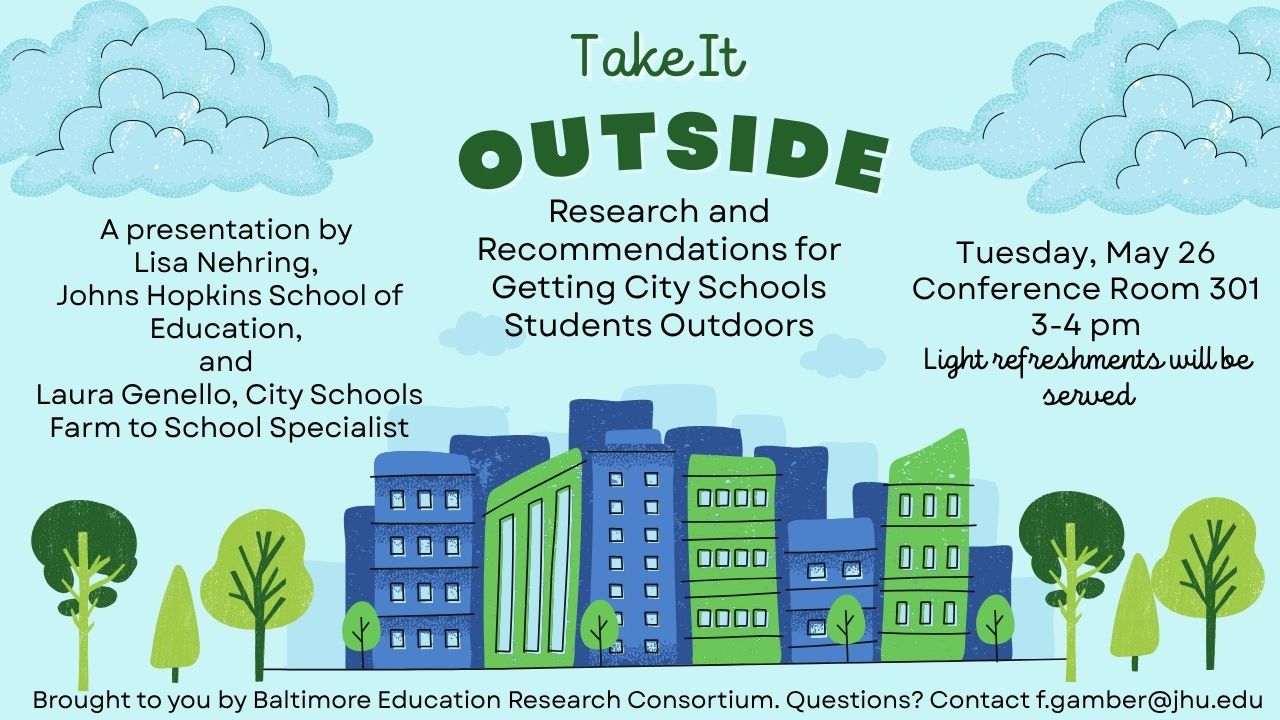
For years, BERC has shared the latest research about education in Baltimore City through its Donuts with BERC presentation series. Our latest edition on May 26 took place at Baltimore City Public Schools headquarters. The presentation, “Take It Outside: Research and Recommendations for Getting City Schools Students Outdoors,” resulted from a research-practice partnership between Lisa Nehring, a doctoral candidate at the Johns Hopkins School of Education, and Laura Genello, Farm to School Specialist at City Schools. An audience of school system staff, university professors, and staff from local environmental nonprofits heard recommendations from the project — which included surveys and interviews with teachers and leaders — about how outdoor learning can support curricula and social-emotional learning.
To learn more about outdoor learning at City Schools, check out their website here.
June: Road Trip!
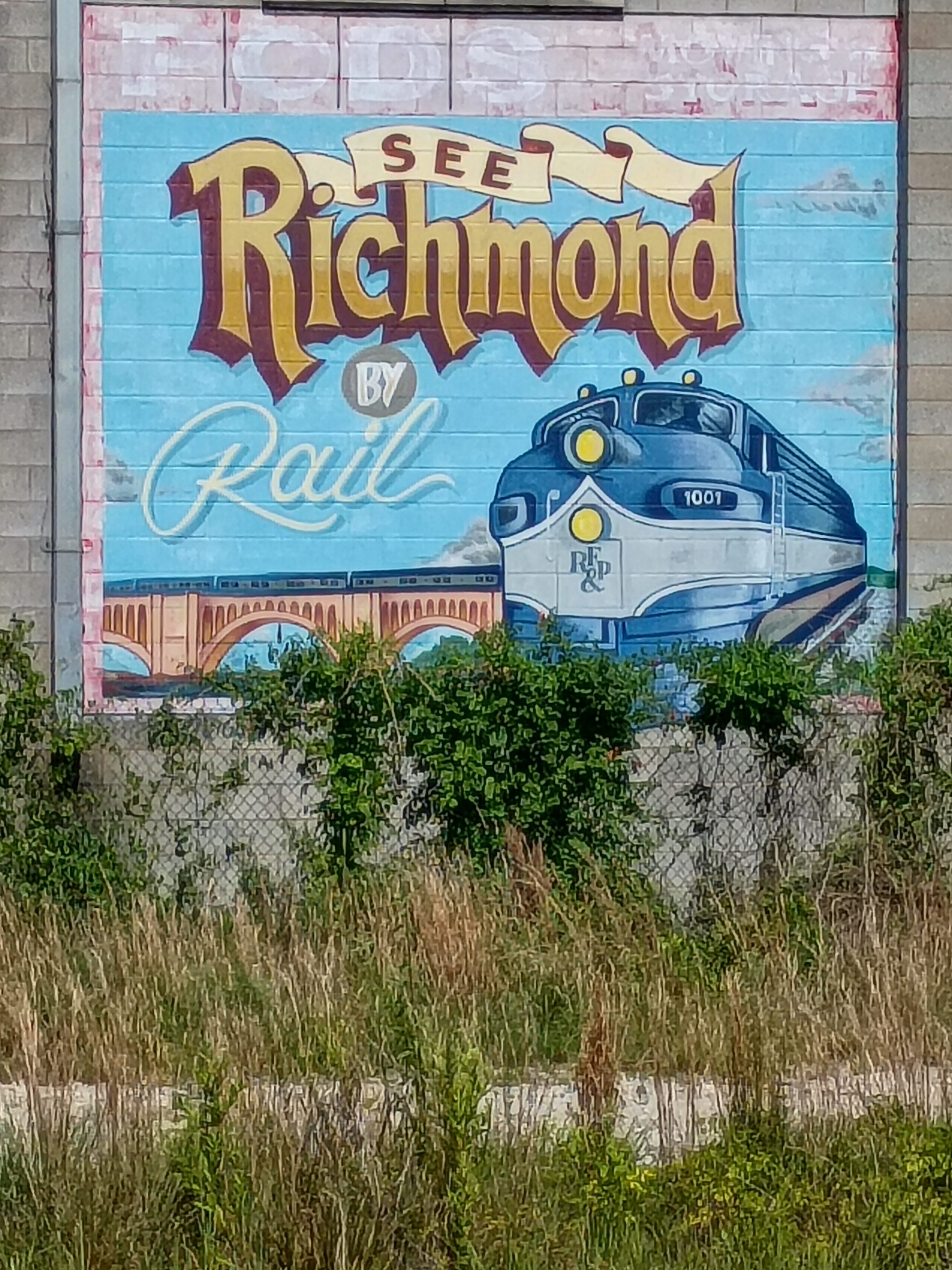
One of the things we love most at BERC is being part of a global network of education research-practice partnerships that allows us to learn from each other. In June, we hit the road (er, railroad) for a trip to Richmond, Virginia. There, the Metropolitan Educational Research Consortium (MERC) held its annual Summit at Deep Run High School. Educators from MERC’s five partner school districts presented research alongside university faculty as well as parents and other community stakeholders, on topics like AI, school closure in Virginia, and literacy professional development. Thank you, MERC, for bringing people together and giving us something to aspire to!
July: Baltimore High School 101
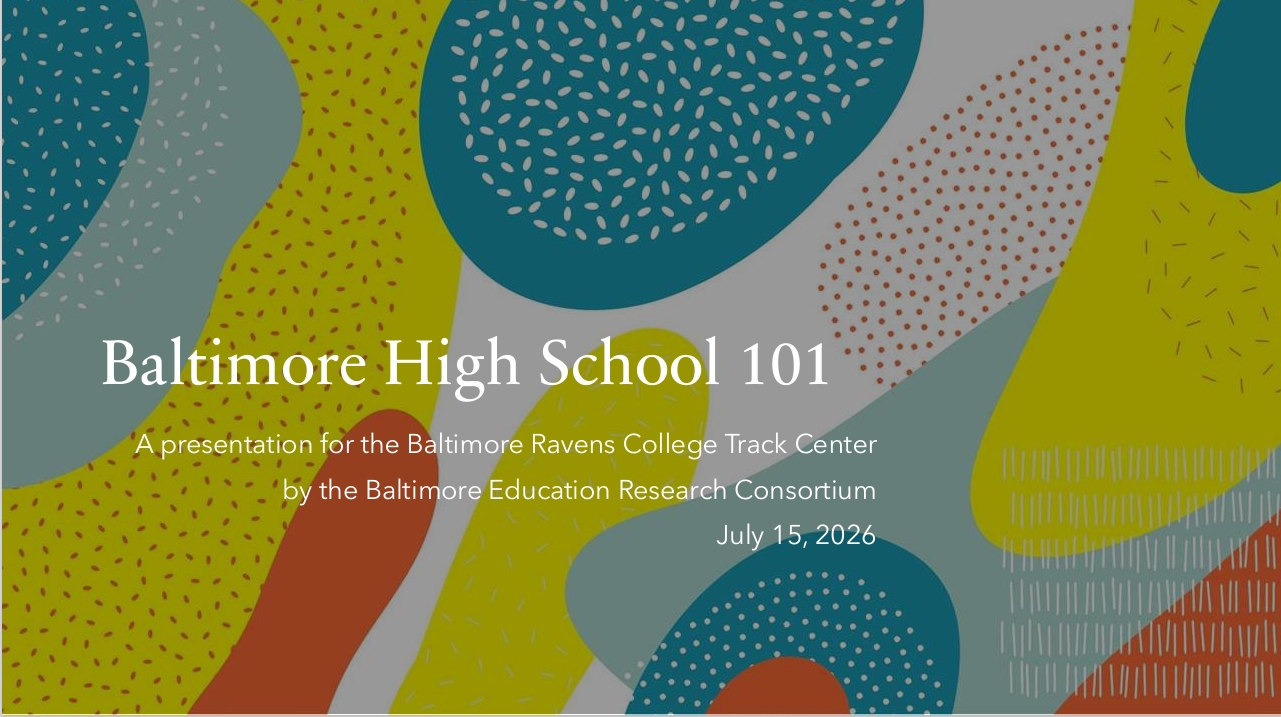
Sharing research in our communities is a huge part of what research-practice partnerships like BERC are all about. On July 15, we facilitated a workshop for the team at College Track Baltimore about the city’s high schools. The workshop combined a historical look at Baltimore’s educational landscape with insights from BERC’s most recent College Access Fact Book. We’d be delighted to bring a similar workshop to your team — contact us any time.
August: Baltimore in Motion


On August 12, BERC hopped aboard a yellow bus with dozens of new Baltimore City Public Schools teachers for “Baltimore in Motion,” a first-ever bus tour orientation to the city. BERC has served on the advisory committee for the overall Baltimore Compass Cultural Orientation Program, of which “Baltimore in Motion” is a part. An amazing team of City Schools educators selected and mapped the tour, with a special emphasis on the city’s history of movement and migration. Our travels took us from Cherry Hill to Pennsylvania Avenue and West Baltimore, the Johns Hopkins medical campus to Highlandtown, southeast Baltimore, and Jonestown. Being a part of this project was one of our favorite summer experiences!
September: A Visit from the Bookmobile
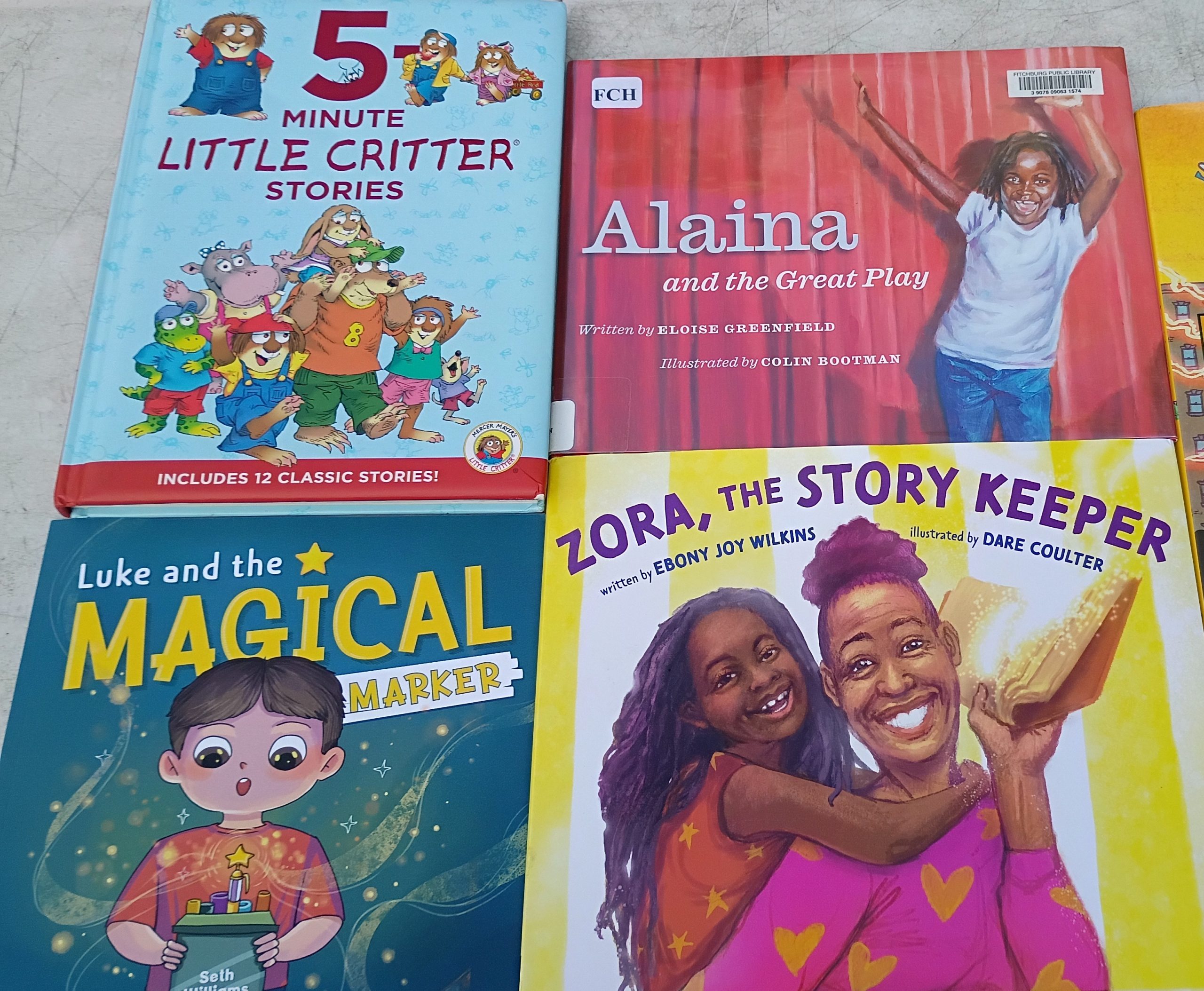
Since 2025, BERC has been helping the Center for Research and Reform in Education at Johns Hopkins School of Education and the Maryland Book Bank to design a research study that spotlights the Book Bank’s Home Library Program. With the help of the Baltimore Ravens Bookmobile, the Home Library Program invites pre-K through third graders to hop aboard and select their own books to take home and enjoy. As part of our support of the research planning, we assisted with a Bookmobile visit to a local school on September 14. These are just a few of the titles that are heading home to be read and loved by Baltimore’s young readers.